.png)

Getting Into Walmart Is Not the Hard Part—Staying There Is
- OmniX

- Apr 22
- 4 min read
For many brands, getting a “yes” from Walmart is treated as the finish line. Months—sometimes years—are spent working toward that initial placement. Securing a meeting, winning the line review, and landing on the shelf feels like the hardest part of the journey.
In reality, it’s just the beginning.
What many suppliers underestimate is how quickly the focus shifts from opportunity to performance. Once your product is on the shelf, Walmart immediately begins evaluating whether it deserves to stay there. The criteria are not subjective—they are operational, measurable, and unforgiving.
This is where many brands fall short. They invest heavily in getting in, but far less in what it takes to stay.
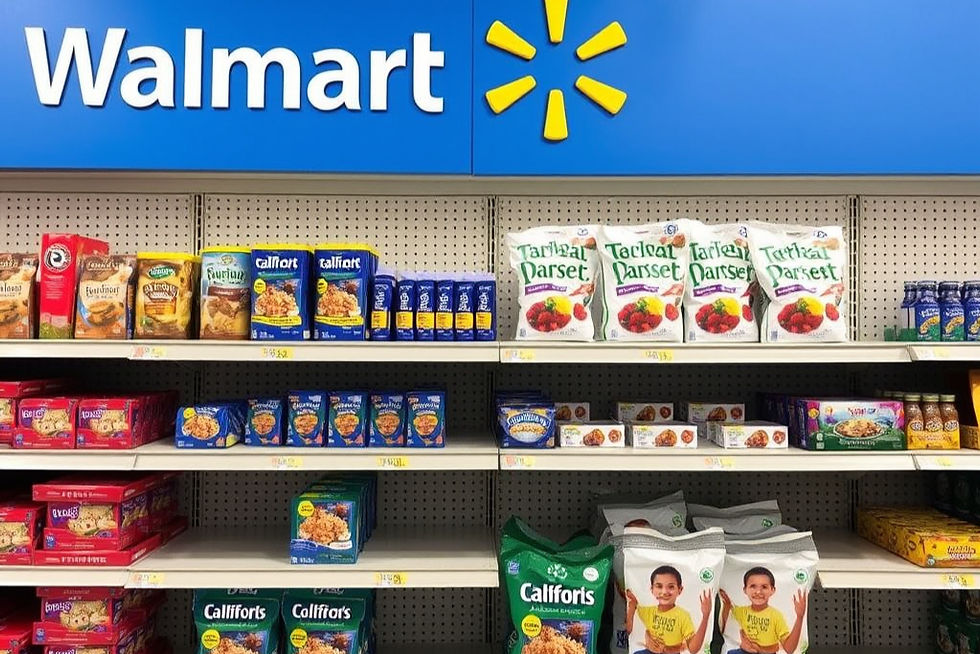
A. Getting on the Shelf Is a Great Moment—Staying There Is a Performance Test
Winning placement is a milestone, but it is not a long-term commitment from Walmart. It is, effectively, a trial period. From the moment your product hits the shelf, performance metrics begin to determine your future.
Walmart closely monitors several key indicators almost immediately, including sales velocity, in-stock levels, and inventory turns. These metrics are not reviewed months down the line—they are assessed within weeks of launch. If a product is not moving, or if it is frequently out of stock, it signals inefficiency and lost revenue at the store level.
Velocity is especially critical. A product that does not sell quickly enough relative to its shelf space becomes a liability. At the same time, poor in-stock performance can be just as damaging. Even strong demand cannot compensate for inconsistent supply, as empty shelves translate directly into missed sales.
The key takeaway is that shelf space at Walmart is earned continuously, not secured permanently. Placement opens the door, but performance determines whether it stays open.
B. Early Performance Decides Your Future
The first 8 to 12 weeks after launch are often the most important period in a product’s lifecycle at Walmart. During this window, your item is effectively proving its viability.
Strong early performance can lead to increased orders, expanded distribution, and stronger positioning in future modular resets. It builds confidence with buyers and demonstrates that your product can contribute meaningfully to category growth.
On the other hand, weak performance during this initial period creates immediate risk. If sales velocity is below expectations or inventory flow is inconsistent, buyers may begin to reduce orders. In some cases, distribution is scaled back before the product has had a chance to stabilize. By the time the next modular review arrives, underperforming items are often candidates for removal.
What makes this challenging is how quickly these decisions can take shape. There is very little time to react once issues become visible. If a brand waits to address problems until they appear in reports, it is often already behind.
This early window is not just a launch phase—it is a high-stakes evaluation period that sets the trajectory for the product’s future.
C. Most Brands Don’t Have a Plan Beyond the “Yes”
One of the most common reasons brands struggle to maintain placement is the lack of a structured post-launch strategy. Too often, the focus is concentrated entirely on securing the initial order, with limited planning for what happens next.
Winning brands approach Walmart differently. They enter the shelf with a clear understanding of how they will support performance from day one. This includes having a defined replenishment strategy, aligned inventory flow, and systems in place to monitor key metrics in real time.
Replenishment is a critical component. Brands need to ensure that inventory is positioned correctly across distribution centers and that forecasts are aligned with expected demand. Gaps in supply, especially early on, can disrupt momentum and negatively impact performance metrics.
Equally important is visibility into the data. Successful suppliers track sales velocity, in-stock levels, and inventory movement closely, allowing them to identify issues before they escalate. This level of awareness enables proactive decision-making rather than reactive problem-solving.
In contrast, brands without a post-launch plan often find themselves responding to issues after they have already impacted performance. By the time out-of-stocks, slow sales, or excess inventory become visible, the opportunity to correct course may already be limited.
Strategic Implications for Suppliers
Staying on the shelf at Walmart requires a different mindset than getting there. It demands operational discipline, cross-functional alignment, and a clear understanding of how performance is measured.
Suppliers need to think beyond the initial order and focus on building a system that supports sustained execution. This includes aligning sales, supply chain, and forecasting functions to ensure that demand is met consistently and efficiently.
It also requires a shift in how success is defined. Placement should not be viewed as the goal, but as the starting point for ongoing performance management. Brands that internalize this are better positioned to maintain distribution, strengthen buyer relationships, and expand over time.
Conclusion: Winning the Shelf Is Temporary—Earning It Is Ongoing
Getting into Walmart is a significant achievement, but it does not guarantee long-term success. The real challenge begins after placement, when performance metrics take over and every week matters.
Suppliers who treat the launch as the beginning of a structured execution plan are far more likely to succeed. Those who do not often find themselves reacting to problems too late, putting their placement—and future opportunities—at risk.
How OmniX Brokers Can Help
At OmniX Brokers, we work with brands to evaluate not just how they enter Walmart, but how they perform once they are there. Sustained shelf presence is a key driver of both growth and business value.
Whether you are preparing to launch or looking to stabilize an existing item, having the right operational strategy in place can make the difference between short-term placement and long-term success.


Comments